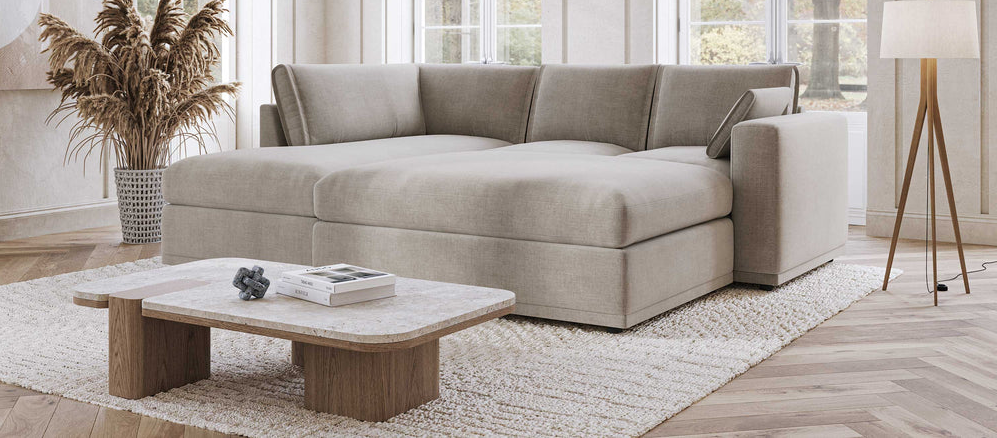
Sofa Club’s customers aren’t hunting for the cheapest sofa in the sale; they’re chasing a look. They’re design-literate, aesthetic-first shoppers buying sofas that belong on a mood board. Our job was to attract more of them, rather than people searching for a cheap sofa online, and balance that with an ambitious revenue target.
Our approach was built on five principles:
- Prove the demand before betting on it. We tracked which product a shopper clicked in search and matched it against what they actually bought. A considerable share bought something different: cheaper ranges won the click, pricier ranges won the order. The demand for higher-value ranges was there, we just weren’t showing it.
- Refuse the discount route. Sofa Club’s positioning depends on staying out of the sale cycle, so full-price ranges were ring-fenced from sale and outlet searches, which were routed to a dedicated outlet campaign instead.
- Reach the buyer before the sale. Internal data showed that customers who order a fabric swatch typically convert very quickly after it arrives, and spend more when they do. Swatch orders became a bidding signal rather than an afterthought, so broad, early-stage searches could optimise towards genuine intent.
- Make ranges compete on merit. Previously, the bestseller had its own campaign and a large share of budget, so it showed for almost everything. We rebuilt the account by sofa type rather than by range, with a tiered value system inside each campaign, so visibility was earned on relevance and value to the business, not handed to whichever range converted cheapest.
- Only show what’s worth selling. We enriched the product feed with custom labels covering range, type, margin and sale status, and moved to value-based bidding. Every other top range carried a higher average order value than the bestseller, so every point of share moved away from it increased the value of each sale.
Along the way, we had to overcome two big challenges:
- Defending a brand name that’s also a category word. “Sofa Club” contains the most searched word in the category, so competitors appear on brand searches and brand clicks cost more than they should. Dedicated brand and product Shopping activity helped protect that visibility.
- Avoiding the easy route. The simplest way to spend a bigger budget is behind what already works, and the bestseller would have absorbed every extra pound. Instead, we weighted the increase towards less proven ranges, spreading revenue and reducing the risk of relying on one product.
The result: search for a sofa now and the algorithm picks the range that best fits the query and returns the best margin, not the bestseller with thin margins and all the budget.